
I needed ten consistent social assets for a small e-commerce brand on a tight budget. The brief was ordinary: same product, five simple background variations, enough negative space for short claims, deliverable in 4:5 and 1:1, no extended revision rounds. The client had already spent more than they wanted on previous creative. The goal was the lowest total cost that still produced images I would be willing to put my name on.
I tested three approaches under real time and money constraints. The winner was not the cheapest generation tool in isolation. It was the workflow that minimized total hours, revision risk, and wasted generations while still clearing the commercial bar.
Here’s the comparison and the workflow I now reach for first when the budget is real.
What “Cheapest” Actually Means
Generation cost is only one line item. The true cost of ten social assets includes:
Time spent writing and refining prompts
Number of generations required to reach a usable set
Revision rounds after client review
Any external tools or upscaling needed for delivery
The risk of having to restart if consistency collapses
A tool that costs less per image but requires three times the selection and repair work is not cheaper. I scored every approach on total hours to a client-ready set of ten and on the number of frames that survived side-by-side consistency and crop checks.
The Three Approaches I Tested
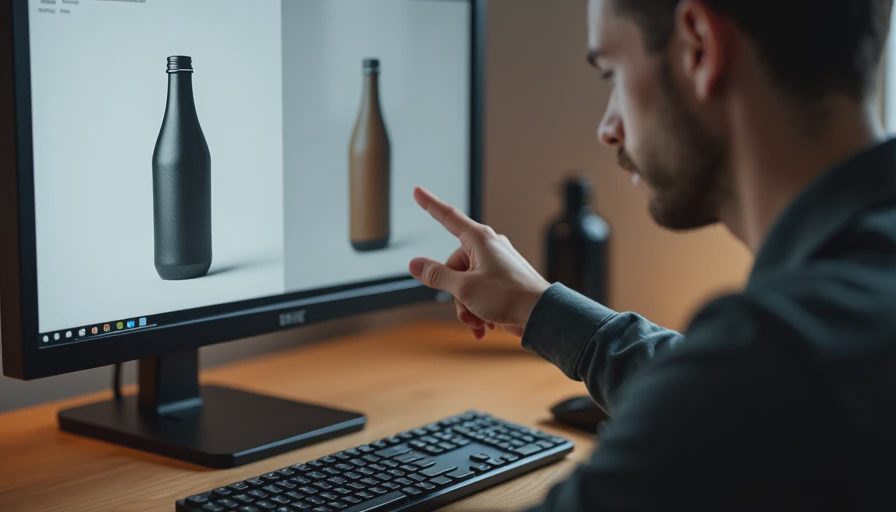
Approach A: High-volume Midjourney with heavy selection
Fast generations, strong immediate aesthetics, higher discard rate. I planned for large batches and aggressive cherry-picking.
Approach B: Flux with tight product lock and small scored batches
Slightly higher per-generation cost and time, lower discard rate, stronger product stability across backgrounds.
Approach C: Stable Diffusion local with maximum control
Lowest pure generation cost, highest setup and maintenance overhead, best theoretical consistency once locked.
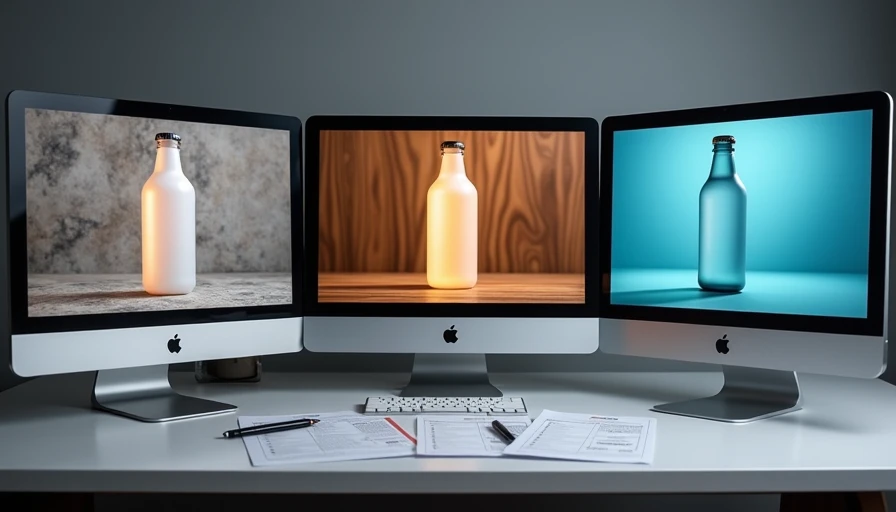
All three used the same locked product description, the same five background territories, and the same negative-space rules. I timed everything from first prompt to a deliverable folder of ten images that passed the commercial checks.
Results
Approach A (Midjourney, high volume)
I generated roughly ninety images to reach ten that survived product consistency and crop tests. Aesthetic quality per frame was high. Side-by-side product drift forced a large discard pile. Total time: approximately 3.5 hours including selection and light cleanup. Client revision risk felt higher because the set still showed small geometry and finish variations.
Approach B (Flux, tight lock, small batches)
I generated forty-eight images. Nineteen passed the product and space checks. Building the final ten was straightforward. Total time: approximately 2.25 hours. Consistency across the five backgrounds was visibly tighter. Revision risk felt lower.
Approach C (Stable Diffusion local)
Generation cost was the lowest. Time to lock the product and stabilize the workflow was the highest. Once running, consistency was strong, but the overhead of maintaining the local setup and the slower iteration loop pushed total time to approximately 3.75 hours for the same quality bar. For a one-off job the overhead was not justified.
The clear winner on total cost for this brief was Approach B.
Why the Middle Path Won
Flux with a disciplined product lock and small scored batches minimized the two most expensive variables: wasted generations and post-selection repair. Midjourney produced more attractive outliers and more frames that looked good alone but failed the set test. Local Stable Diffusion produced excellent consistency once locked, yet the setup and iteration cost erased the generation savings for a ten-image job.
The cheapest workflow was the one that got me to ten usable, consistent assets in the fewest total hours with the lowest probability of a painful revision round.
The Exact Workflow I Now Use
When the brief is ten social assets and the budget is constrained, I follow this sequence:
Lock the product first.
Write a short, precise product block. Generate a small neutral set. Select the best product reference. Do not proceed until geometry and material are stable.Define five simple background territories in advance.
One sentence each. No open-ended exploration.Write one foundation prompt per territory using the identical product block.
Product and material first, scene and light second, composition and negative-space rules third, short exclusions fourth. Style language stays minimal.Generate in small batches of four to six.
Score immediately against product fidelity, negative space, and crop safety. Adjust only one variable at a time.Stop at two strong candidates per territory.
Select the final ten. Run a side-by-side consistency check and a quick crop test for 4:5 and 1:1.Deliver with placement notes.
Short note on recommended text zone for each image. No extra polish unless the client has budgeted for it.
Total time on a typical job of this scope: two to two-and-a-half hours. Generation count usually stays under fifty. Revision rounds on the client side have been minimal because the product holds and the space is already protected.
Cost Tradeoffs I Accept
I accept slightly less “wow” per individual frame in exchange for a set that holds together. I accept a modest per-generation cost in exchange for fewer total generations and less selection labor. I accept a structured process instead of open-ended exploration. Those tradeoffs consistently produce the lowest total cost that still meets the commercial standard I am willing to stand behind.
I do not accept product drift, collapsed negative space, or a set that requires heavy external repair to look coherent. Those costs always exceed the savings of a cheaper generation tool.
When I Choose a Different Path
If the client needs one or two hero images with maximum aesthetic impact and continuity is secondary, I start with Midjourney and accept the higher selection overhead.
If the job is large, recurring, and I already have a locked local pipeline, Stable Diffusion becomes more competitive.
For the common case of ten social assets on a constrained budget with real consistency requirements, the Flux-based workflow above has been the cheapest reliable path.
Limitations
This comparison was run on a single product type, five simple backgrounds, and a ten-image deliverable. More complex scenes, stricter brand systems, or much larger sets would shift the numbers. Subscription costs, local hardware amortization, and individual speed at prompting all affect the final math. I measured the process I actually use under client conditions, not theoretical minimums.
The Practical Takeaway

The cheapest workflow is the one that minimizes total hours and revision risk while still clearing the bar for product consistency and usable space. For ten social assets under real budget pressure, that has been a tight product lock, small scored batches, and a model that protects the product across background changes.
I ran the three approaches side by side so the next time a client asks for ten assets on a limited budget I already know which path produces the lowest true cost. Test the full workflow before you trust the per-image price. The cheapest generation is irrelevant if the set does not survive the grid.
Brands and cases are illustrative. For AI tool features, rules and availability, refer to their official sites.

Leave your thoughts here, too.