
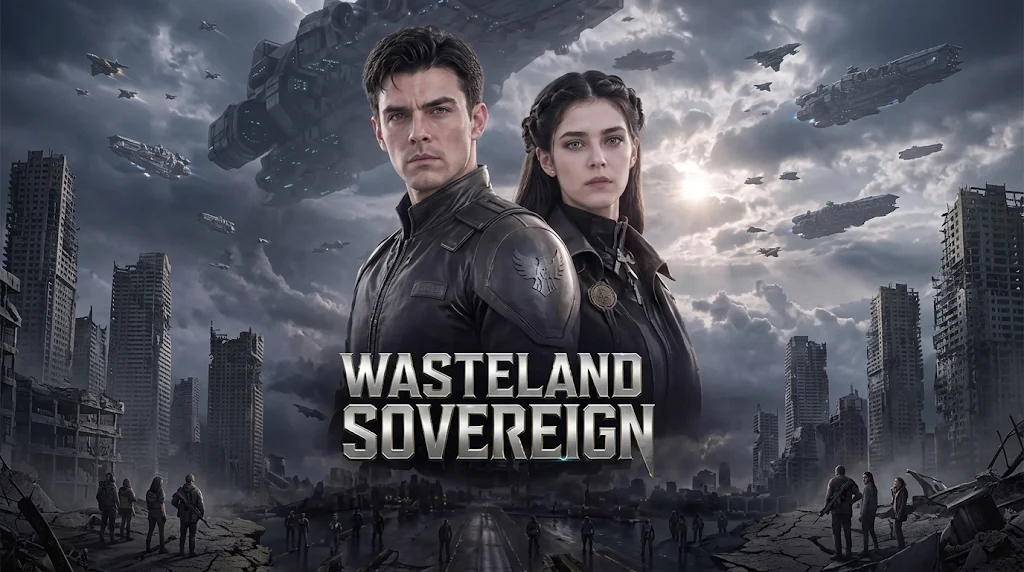
Explore the AI-generated short drama Wasteland Sovereign, break down its cinematic visual style, and learn 6 practical prompts for creating immersive post-apocalyptic AI videos.
AI-generated short dramas are becoming increasingly ambitious, combining cinematic environments, recurring characters, dramatic storytelling, and sophisticated visual effects. Wasteland Sovereign is an interesting example of this trend.
Available on ReelShort, this 67-episode AI-generated series combines post-apocalyptic science fiction, military power, hidden identities, and relationship drama. Its promotional poster offers several useful references for creators interested in building cinematic AI-generated worlds.
Rather than simply reviewing the series, this guide focuses on its visual design and explores how similar scenes can be recreated using AI image and video generation tools.
1. What Is Wasteland Sovereign About?
Wasteland Sovereign follows Kane, a powerful warrior who conceals his true identity in a post-apocalyptic world.
Although he secretly helps his girlfriend Sienna achieve seventeen prestigious military honors, she eventually looks down on him when her career advances. Meanwhile, Eve, the ruler of Dome City, faces pressure to enter an arranged political marriage.
To escape this situation, Eve proposes a fake marriage to Kane, unaware of his extraordinary abilities.
The story combines several popular short-drama elements:
Hidden identity: An apparently ordinary soldier possesses extraordinary power.
Betrayal and revenge: A relationship collapses because of misunderstandings and unequal status.
Fake marriage: Two characters enter a strategic relationship.
Power reversal: The underestimated protagonist eventually reveals his true strength.
Post-apocalyptic fantasy: Military technology and extraordinary abilities shape the fictional world.
These familiar storytelling elements are combined with large-scale science-fiction visuals, making the series an interesting reference for AI short-drama creators.
Official series page: https://www.reelshort.com/full-episodes/wasteland-sovereign-6a7d37d954d2787d000968cc
2. Three Visual Techniques That Make Its Poster Stand Out
The promotional poster provides a useful example of how AI-generated images can communicate an entire fictional world through composition and lighting.
2.1 Extreme Scale Contrast
The enormous futuristic battleship dominates the upper background, while the two protagonists occupy the foreground.
This contrast immediately establishes the technological scale and military atmosphere of the fictional world.
Useful prompt keywords include:
Colossal futuristic battleship
Extreme scale contrast
Massive industrial structures
Atmospheric perspective
Storm-covered skyline
When generating similar images, describe the relative size and positioning of the objects instead of simply listing futuristic elements.
2.2 Layered Cinematic Composition
The poster can be divided into three visual layers:
Foreground: The two main characters.
Midground: The battleship and storm clouds.
Background: The distant ruined city.
This arrangement creates depth and prevents the image from looking like a flat character portrait.
Useful composition terms include foreground hero portrait, layered composition, cinematic depth, and wide-angle environment.
2.3 Cold Lighting and Warm Backlight
The overall image uses cool blue-gray tones, while warmer light breaks through the clouds behind the characters.
This contrast separates the protagonists from the environment and creates a dramatic science-fiction atmosphere.
For similar results, combine cold environmental lighting, subtle rim lighting, volumetric rays, and desaturated cinematic color grading.
3. Six AI Video Prompts Inspired by Wasteland Sovereign
The following prompts are original creative examples inspired by the series' visual style. They are not the original prompts used by its production team or extracted frames from the episodes.
They can be adapted for Runway, Kling, Luma Dream Machine, and other compatible AI image-to-video workflows.
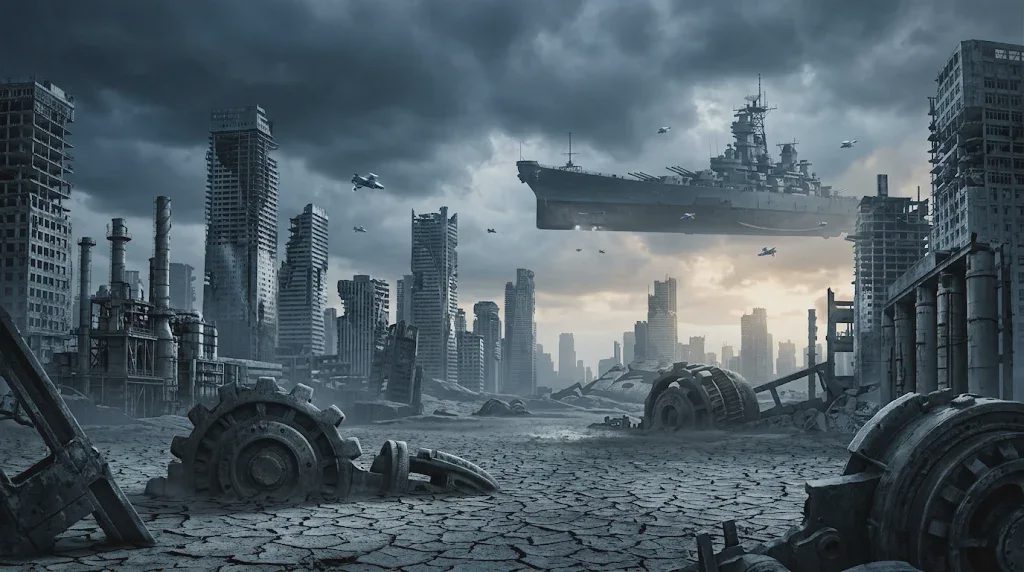
Prompt 1: A Post-Apocalyptic City
Visual goal: Establish the scale and atmosphere of the fictional world.
Image generation prompt:
A colossal futuristic military battleship hovering
above a devastated post-apocalyptic megacity,
enormous industrial structures, ruined skyscrapers,
dark storm clouds, distant flying aircraft,
atmospheric volumetric lighting, cold blue-gray
color palette, extreme scale contrast, realistic
metallic details, epic wide-angle composition,
photorealistic science fiction movie cinematography.
Image-to-video prompt:
The camera slowly pushes forward toward the
enormous battleship as it drifts through storm
clouds. Smaller aircraft move across the distant
skyline. Clouds roll around the ship and subtle
blue lights pulse along its hull.
Key technique: Combine environmental depth with large-scale objects. The relationship between the battleship and the ruined city creates a stronger sense of scale than simply adding more visual details.
Prompt 2: Introducing the Hidden Hero
Visual goal: Create a protagonist who appears ordinary but has a commanding presence.
Image generation prompt:
A mysterious young male military commander
standing in a ruined futuristic city, short dark
hair, sharp facial features, fitted black tactical
leather jacket with subtle military insignia,
calm confident expression, cinematic medium
close-up, dramatic side lighting, realistic skin
texture, dark desaturated color grading,
premium science fiction film still.
Image-to-video prompt:
The man stands motionless as the wind gently
moves his jacket. He slowly raises his eyes
toward the distant sky, maintaining a calm
expression. The camera gradually pushes closer
to his face.
Key technique: Small movements can create powerful character moments. A controlled head turn or subtle change in eye direction is often more effective than complicated actions.
Prompt 3: Introducing the Female Lead
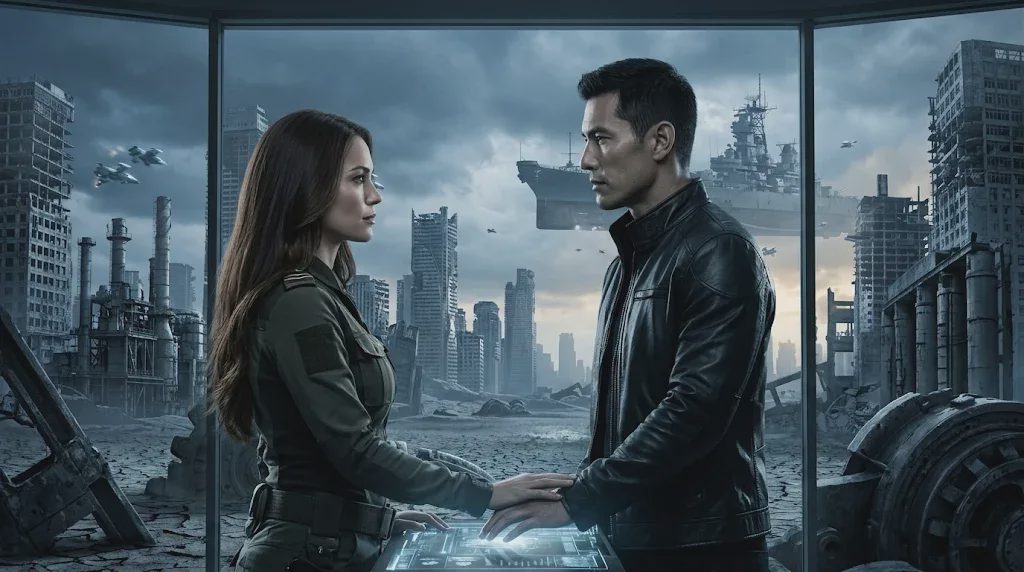
Visual goal: Establish a strong female character with authority and independence.
Image generation prompt:
A determined young female city ruler in a
post-apocalyptic science fiction world, long
dark brown hair, refined facial features, elegant
dark military-inspired outfit, standing inside
a futuristic command center, panoramic windows
overlooking a ruined city, cinematic medium shot,
soft backlighting, realistic facial details,
dramatic atmosphere, photorealistic.
Image-to-video prompt:
The woman slowly turns her head toward the
camera while maintaining a composed expression.
Her hair moves gently in the air. The camera
makes a subtle horizontal tracking movement.
Key technique: Use clothing, architecture, and character positioning to communicate social status without relying on lengthy dialogue.
Prompt 4: A Dramatic Betrayal Scene
Visual goal: Communicate emotional conflict through visual composition.
Image generation prompt:
An emotional confrontation inside a futuristic
military promotion ceremony hall. A young man
in a modest dark uniform stands alone in the
foreground while a confident female officer
stands on an elevated ceremonial platform.
Large military banners, futuristic architecture,
officers in the background, dramatic cinematic
composition, strong foreground-background
separation, cold overhead lighting, realistic film still.
Image-to-video prompt:
The female officer turns away from the man
with a cold expression. The man remains still,
holding a small rose. The camera slowly pulls
back, revealing the distance between them and
the surrounding military crowd.
Key technique: Spatial relationships can communicate emotions. Separating characters within the frame helps visually reinforce rejection, betrayal, and isolation.
Prompt 5: The Giant Battleship Reveal
Visual goal: Create a memorable large-scale science-fiction moment.
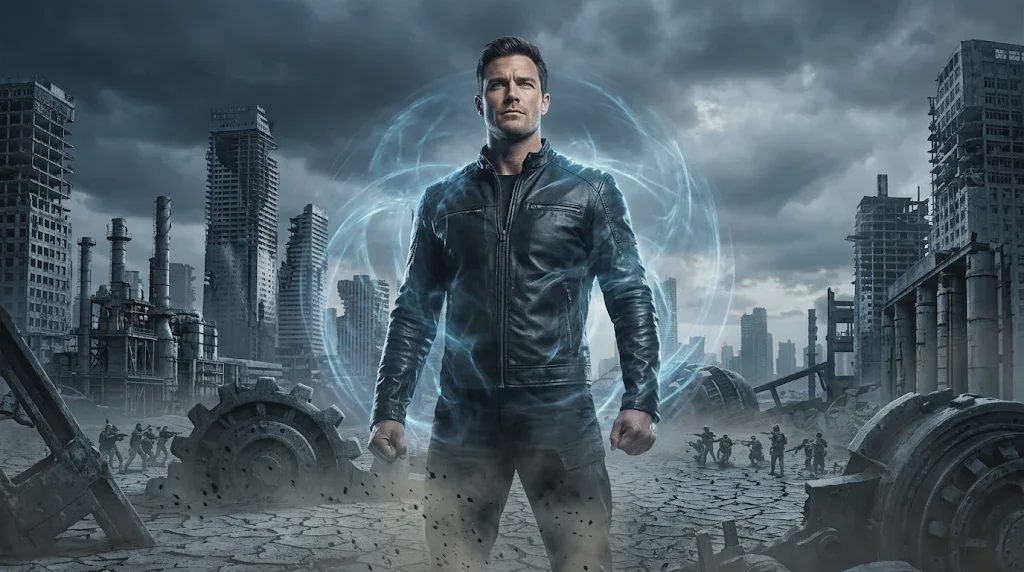
Image generation prompt:
A gigantic advanced military battleship emerging
from dense storm clouds above a devastated
futuristic city, glowing blue engine cores,
intricate armored hull, enormous scale, tiny
aircraft flying around the vessel, dramatic
atmospheric perspective, volumetric light,
epic science fiction spectacle, cinematic
wide-angle composition, photorealistic.
Image-to-video prompt:
The massive battleship slowly emerges from
the storm clouds. Its blue engine lights
intensify as the clouds part around the hull.
The camera cranes upward, gradually revealing
the enormous scale of the vessel.
Key technique: Reveal the environment gradually. A controlled camera movement can make a generated scene feel much more cinematic.
Prompt 6: The War God Awakening
Visual goal: Show the protagonist transitioning from an underestimated soldier into a powerful warrior.
Image generation prompt:
A powerful futuristic warrior standing in
the center of a devastated battlefield, the
same male protagonist with short dark hair
and a black tactical leather jacket, subtle
glowing blue energy surrounding his body,
distant military forces and ruined structures,
dramatic storm clouds, powerful rim lighting,
cinematic low-angle hero shot, realistic facial
details, epic dark science fiction atmosphere.
Image-to-video prompt:
The man slowly raises his head as a faint
blue energy field forms around him. Dust
particles rise from the ground and his jacket
moves in the increasing wind. The camera
slowly pushes in from a low angle, ending
with a close-up of his eyes.
Key technique: Build visual effects progressively. A gradual increase in lighting, particles, and environmental movement creates a more controlled transformation scene.
4. How to Maintain Character Consistency in AI Videos
One of the biggest challenges in AI-generated short dramas is keeping recurring characters recognizable across different scenes.
A character may look convincing in one image but develop a different face, hairstyle, or outfit in the next generation.
A practical solution is to establish character references before generating individual shots.
Step 1: Create character reference images.
Generate front-facing portraits, side profiles, three-quarter views, and full-body images. Keep facial features, hairstyles, clothing, and body proportions consistent.
Step 2: Reuse a fixed character description.
For example:
Young adult male protagonist, short dark hair,
sharp facial features, defined jawline, dark eyes,
fitted black tactical leather jacket, subtle
military insignia, calm and controlled expression.
Step 3: Separate character descriptions from scene instructions.
Use the same reference image when placing the protagonist in new environments. Describe only the new action, location, camera angle, and lighting while keeping the character's appearance unchanged.
Tools such as Runway Gen-4 References can help creators reuse visual references across different generations.
5. Text-to-Video vs. Image-to-Video: Which Is Better?
Both workflows are useful, but they serve different production needs.
Workflow | Best application |
|---|---|
Text-to-Video | Large environments and establishing shots |
Image-to-Video | Character actions and close-ups |
Start/End Keyframes | Controlled scene transitions |
Reference-Based Generation | Recurring characters and locations |
For character-driven scenes, generating an approved still image first and animating it afterward is often a practical approach.
For environmental footage, text-to-video offers more flexibility.
The key is to treat each generated clip as an individual shot rather than expecting one prompt to produce an entire coherent episode.
6. Final Takeaways for AI Short-Drama Creators
Wasteland Sovereign offers several useful lessons for creators exploring AI-generated storytelling.
Build the world first: Establish environments, architecture, and visual assets before producing complex action scenes.
Prioritize character consistency: Recurring characters need recognizable faces, clothing, and proportions.
Use specific camera language: Terms such as slow push-in, low-angle shot, and wide establishing shot provide clearer instructions than generic cinematic descriptions.
Design keyframes around important story moments: Betrayal, identity reveals, and large-scale battles deserve greater visual attention.
Keep individual shots simple: Focus each video generation on one main action, then connect the clips through editing.
The biggest lesson is that impressive AI images alone do not create a successful short drama. Consistent characters, deliberate camera movement, and story-driven visual sequences are what turn individual generated clips into a coherent cinematic experience.
For AI tool features, rules and availability, refer to their official sites.


Leave your thoughts here, too.