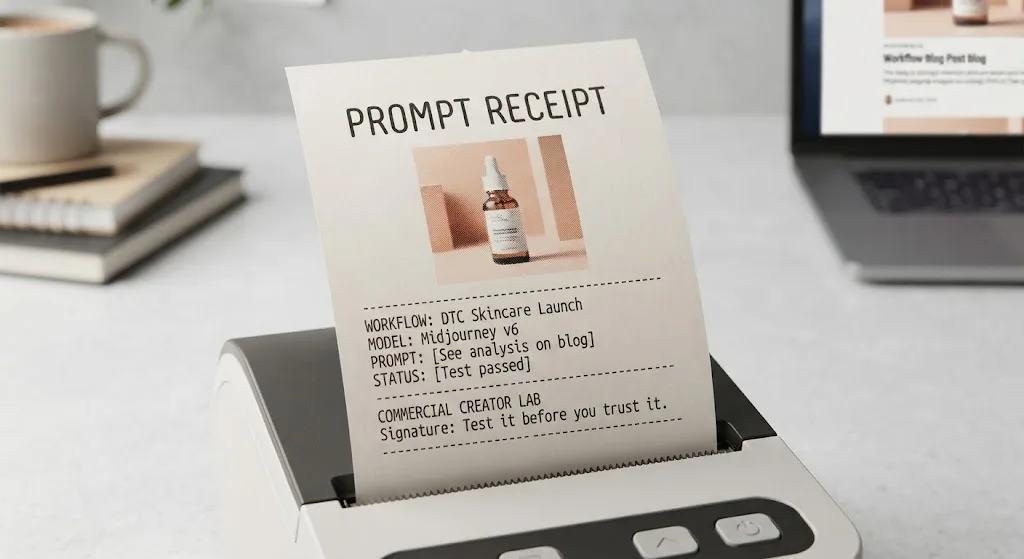

The short answer is that civitai red is an ambiguous search term, not a clearly defined image-generation feature I would trust without checking the source. It can refer to a model, LoRA, creator tag, image theme, or a discussion about red-rated content on Civitai. That distinction matters. Downloading the wrong file can waste an evening of GPU time, produce unusable images, or create a licensing problem for a commercial project.
I ran the practical discovery process I use for unfamiliar Civitai searches: identify the exact asset, inspect its description, check the base model, review sample images, and test a small batch before building a client workflow around it. The demo looked great. The deliverable did not always follow. Here is how to investigate the term without treating one attractive thumbnail as proof.
Start by identifying what civitai red actually names
Search results on model-sharing platforms often combine tags, titles, prompts, creator names, and user comments. A page associated with civitai red might be a Stable Diffusion checkpoint, a LoRA designed to add a visual style, an embedding, or simply an image containing red clothing or lighting. Those assets behave very differently.
A checkpoint changes the broader image-generation behavior. A LoRA usually adds a narrower style, subject, or composition influence and must be loaded with a compatible base model. An embedding can affect a prompt through a special token, while a workflow file may contain settings rather than a model itself. If a page does not clearly state the file type, base model, trigger words, license, and recommended weight, I do not treat it as production-ready.
Open the asset page rather than relying on a search preview. Look for the version date, download format, creator notes, example prompts, content rating, and user feedback. A red badge or red visual theme is not enough information to determine what the file does.

How to test a Civitai asset safely
For a first pass, make a clean test folder and record the model name, file type, hash if available, sampler, steps, resolution, guidance scale, and seed. You do not need a laboratory setup. You need enough information to recreate the result after the initial excitement wears off.
Start with three prompts: a simple portrait, a product-style composition, and a difficult scene with hands or text. Use the same seed when comparing settings, then change only one variable at a time. Generate four to eight images per prompt. This reveals whether civitai red is producing a repeatable look or merely benefiting from a carefully selected showcase image.
Keep your first resolution modest, such as 512 by 768 or 768 by 768 when the model supports it. A batch of eight images is faster and cheaper than repeatedly upscaling a weak composition. If the model is a LoRA, begin near the creator's suggested weight, then test lower and higher values. Excessive weight often creates harsh color shifts, plastic skin, broken anatomy, or a style that overwhelms the subject.
Check compatibility before chasing quality
Many failed downloads are not really quality failures. They are compatibility failures. A model trained for SDXL will not behave like a model trained for SD 1.5, and a Flux workflow requires a different setup from a traditional Stable Diffusion checkpoint. The interface may let you load an incompatible file, but that does not mean the result will be useful.
Before testing civitai red, confirm the base architecture and your software version. In ComfyUI, check the required nodes and whether the workflow expects a particular text encoder, VAE, ControlNet, or upscaler. In an easier interface, confirm that the model appears in the correct checkpoint or LoRA directory and that the file actually loads.
Also inspect memory requirements. A large checkpoint can push a modest graphics card into slow generation or memory errors. If one image takes several minutes at a basic resolution, it is a poor choice for rapid client exploration even if the style is attractive. Useful is a higher bar than impressive.
Do not skip licensing and content checks
A creator's download page may provide a license, but the license can differ between the model, training images, and generated output. Read the stated permissions before using an asset for ads, packaging, paid social, or a product page. “Free download” does not automatically mean “approved for every commercial use.” Save a copy of the license text and the page URL with your project notes.
The same discipline applies to content controls. Some Civitai pages contain mature or explicit material, and a search result can lead somewhere different from the safe-for-work asset you intended to inspect. Use platform filters, avoid downloading files from random mirrors, and do not put confidential client references into public prompts or community uploads.
For brand work, I also check whether the generated images accidentally reproduce recognizable logos, protected characters, or a competitor's distinctive packaging. A model can be technically permitted while the final image still creates a separate clearance issue.
A practical comparison against a general model
The right comparison is not “Which image looks coolest?” I compare the asset against a general-purpose model using the same brief, prompt length, resolution, and number of attempts. For an e-commerce concept, I might test a clean bottle on a neutral surface, a three-quarter product angle, and a version with empty space for headline copy.
If civitai red produces the desired palette in four generations while the baseline needs twelve, it may earn a place in exploration. If it creates attractive backgrounds but mangles the bottle label, it is a moodboard tool, not a final-image solution. If it needs extensive prompt tricks to avoid unwanted details, the saved generation time may disappear during cleanup.
Record revision effort. A freelancer billing $75 per hour does not really save money with a model that cuts generation time by ten minutes but adds forty minutes of masking and retouching. The model wasn’t the only thing I got wrong in early tests; I measured speed and forgot delivery quality.
Build a repeatable workflow around the result
Once a Civitai asset passes the first comparison, save a compact recipe. Include the model version, LoRA weight, trigger words, negative prompt if used, sampler, steps, guidance, resolution, seed range, and upscaling method. Add two successful prompts and two failure notes. Future-you will appreciate this when a client asks for six more variations three weeks later.
For consistent subjects, combine the asset with controlled references, pose guidance, or an image-to-image workflow rather than expecting text alone to preserve every detail. For product work, generate the environment separately when possible and composite the approved product afterward. This reduces label distortion and gives you more control over copy space, shadows, and brand color.
Keep original generations, not just the polished exports. A failed batch can reveal that the model breaks at a certain aspect ratio or confuses a trigger word with a subject. That information is more valuable than another lucky thumbnail.
Final takeaway for creators
Treat civitai red as an investigation prompt, not a recommendation. Confirm what the page names, identify the architecture, read the license, test several prompts, and compare the output with a baseline. For personal experiments, a visually interesting result may be enough. For a paid brief, repeatability, cleanup time, and usage rights matter more than novelty.
My process is deliberately boring: test it before you trust it. If the asset survives a controlled batch and produces images that need fewer revisions, keep documenting it. If it only wins on one showcase image, move on. Civitai has useful tools for discovery, but the responsibility for selecting, checking, and delivering the final image still sits with the person running the workflow.
For AI tool features, rules and availability, refer to their official sites.


Leave your thoughts here, too.