When a client needs three distinct creative directions by end of day and the only reference is a short brief plus one product photo, speed of exploration matters more than final-pixel perfection. I have used both ChatGPT Image and Midjourney for exactly this stage of the work. The question is not which tool makes the most beautiful single frame. The question is which one gets me to three clear, usable directions faster so the client can choose a path before we invest in polished assets.
I ran a controlled comparison on a real brief: a small DTC skincare brand launching a new serum. The request was three distinct creative directions for paid social and landing-page hero exploration. Product had to remain recognizable. Negative space for short claims was required. Turnaround was same-day. I timed both tools from first prompt to a shortlist of three directions the client could actually react to.
Here’s what the test showed.
The Brief and the Success Criteria
The product was a frosted glass dropper bottle with a minimal label. The brand wanted directions that felt elevated but not clinical. Three distinct territories:
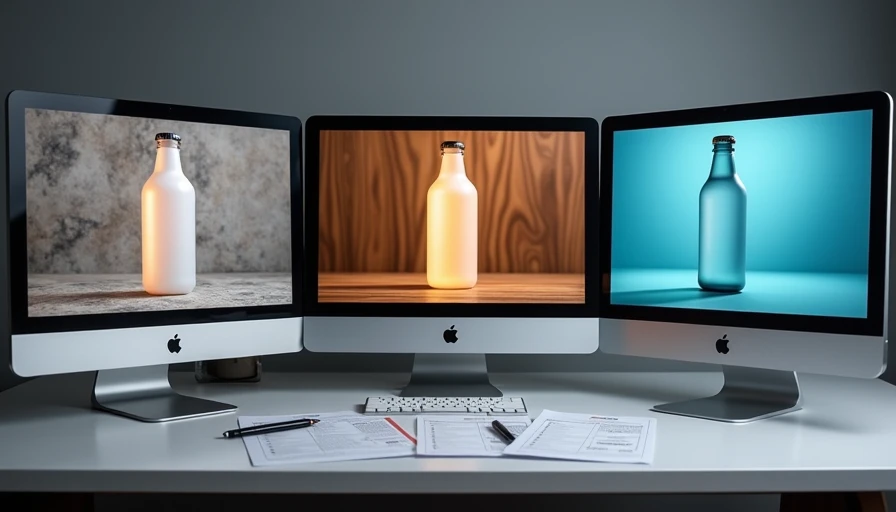
Clean bathroom shelf, soft natural light, self-care ritual
Warm neutral fabric or linen surface, quieter “daily habit” mood
More design-forward, simple geometric support, higher contrast
Each direction needed at least one frame that left clear space for a short headline and felt consistent enough that we could later expand it into a small set. I scored the tools on three practical measures:
Time from first prompt to three presentable directions
How well the product held its shape and finish across the exploration
How much additional prompting or cleanup was required before the frames were client-ready for a direction discussion
I did not score final production quality. That is a later stage. This test was only about fast creative direction.
Test Conditions
Both tools received the same core product description and the same three direction summaries. I kept prompts short and structural. Product and material first, scene and light second, composition and space third, short exclusions last. Style language stayed minimal until the direction itself was clear.
I worked in the interfaces I actually use under deadline. No custom fine-tunes, no external ControlNet setups, no extended post-processing beyond basic selection and light cropping for presentation. Wall-clock time included writing prompts, generating, reviewing, and selecting the three directions.
ChatGPT Image: Speed and Conversational Steering
ChatGPT Image was the faster tool for pure direction exploration.
I could describe the brief in near-natural language, ask for three variations, then immediately steer with follow-ups: “make the light cooler,” “push the bottle slightly left to open the right side,” “reduce the fabric texture so it feels cleaner.” The conversational loop let me adjust one variable at a time without rewriting a full prompt from scratch. For early-stage direction work this is a genuine advantage.
Product consistency was acceptable for exploration but not tight enough for final assets. The frosted glass and dropper proportions drifted between generations more than I like. Label details softened or shifted. For a direction conversation with the client those issues were secondary; the overall mood and framing were clear enough to decide which territory felt right.
Time from first prompt to three presentable directions: approximately 35 minutes. That included two rounds of conversational refinement per direction. The frames were not production-ready, but they were clear enough that the client could say “direction two feels most like us, let’s develop that.”
The main limitation was control over precise spatial constraints. Negative space requests were followed inconsistently. When I needed the right third reliably empty, I had to repeat the instruction and still accept some frames where soft shadows or fabric folds crept in. For pure speed of ideation this was tolerable. For anything tighter it became friction.
Midjourney: Stronger Frames, Slower Steering
Midjourney produced more immediately polished frames and better product stability in the same time window, but the steering process was slower.
Each adjustment required a new prompt or a careful variation rather than a conversational tweak. I could get strong results, yet the loop of “generate, review, rewrite, generate” took longer when the goal was rapid exploration rather than final quality. Once a direction locked in, the frames were closer to something I could later refine into deliverables. The frosted glass held more consistently. The dropper shape drifted less. Negative space was easier to enforce with explicit composition language.
Time from first prompt to three presentable directions: approximately 55 minutes. The extra time came from prompt iteration rather than generation speed itself. The upside was that the selected frames already satisfied more of the later production constraints. I spent less time explaining to the client what would still need to be fixed.
Midjourney’s strength in this test was output quality per generation. Its cost was the slower feedback loop when the task was still “which direction do we pursue.”
Direct Comparison on the Metrics That Mattered
On pure speed to three client-ready direction frames, ChatGPT Image won. The conversational interface let me explore and discard ideas faster. I could test a lighting change or a composition shift in one sentence instead of a full prompt rewrite.
On product fidelity and spatial reliability during exploration, Midjourney was stronger. The bottle looked more like the same object across the three directions. Negative space held more consistently when I specified it.
On how much work remained after the direction meeting, Midjourney left me closer to production. ChatGPT Image left me with clearer client decisions but more structural cleanup before I could expand the chosen direction into a full set.
Neither tool failed the job. They optimized different parts of the early creative process.
How I Actually Use Them Now
For same-day creative direction when the client needs to choose a territory quickly, I start with ChatGPT Image. I use it to generate the first pass of three directions, steer conversationally, and get to a decision point fast. Once the client picks a direction, I move that concept into Midjourney (or Flux, depending on the product) for the tighter, more consistent exploration that will become the actual assets.
If the brief already has a clear visual territory and the pressure is on consistency from the first frame, I start in Midjourney and accept the slower steering. The extra time is usually recovered later in reduced revision rounds.
I no longer treat the two tools as interchangeable. ChatGPT Image is currently my faster sketching and direction tool. Midjourney is the stronger tool when the frames need to hold product geometry and space well enough that the client is not just reacting to mood.
Practical Prompt Differences That Showed Up
In ChatGPT Image I could be slightly more conversational and still get usable direction frames. Short follow-ups worked. In Midjourney the same casual language produced more drift; the four-part structural prompt performed better and reduced the number of complete rewrites.
Negative space was the clearest differentiator. Explicit, constraint-style language (“clear empty space occupying the right third, no objects”) was more reliable in Midjourney during this test. ChatGPT Image required more repetition and still delivered more frames where the space was only partially respected.
Product material notes mattered in both, but Midjourney responded more stably to precise finish descriptions on the frosted glass. ChatGPT Image needed more reinforcement when the lighting changed.
Limitations of the Test
This was one product category, one urgency level, and one set of direction territories. A more complex scene with hands or multiple products would shift the results. A brief that already included tight brand references might reduce the speed advantage of the conversational tool. I also did not test every available parameter or external workflow. I tested the way I actually work when a client needs directions before close of business.
The conclusion is therefore narrow on purpose. For fast creative direction under the conditions described, ChatGPT Image got me to a client decision faster. Midjourney produced stronger frames that required less cleanup afterward. I use both, in sequence, more often than I use either one alone.
The Takeaway
When the job is pure speed of exploration and the deliverable is three clear directions the client can choose from, ChatGPT Image currently wins on time to decision. When the frames themselves need to hold product and space well enough to survive immediate scrutiny, Midjourney holds the edge.
The demo from either tool can look great. The only question that matters for this stage is which one gets the client to a decision with the least wasted motion so the real production work can begin.
I ran the comparison so you can skip the trial-and-error on a live deadline. Test both against your actual time pressure and consistency needs. Useful is still a higher bar than impressive.
Brands and cases are illustrative. For AI tool features, rules and availability, refer to their official sites.
Leave your thoughts here, too.